Production
Carbon footprint
A carbon footprint is a measure of the amount of CO2 emitted, for example by a company. In 2022, we produced approximately 64,993 tonnes of CO2 emissions. Based on around 803,524 kitchens, that amounts to some 81 kg of CO2 per kitchen. The present greenhouse gas balance of 81 kg CO2 shows the emissions that arise in direct connection with the company's own value creation. This is still too high for us. That’s why we’re pursuing a broad sustainability strategy aimed at improving our carbon footprint.
By the way, if we are to achieve the Paris Agreement goal of limiting the global temperature rise to 1.5 degrees, then every German will have to keep their CO₂ emissions below 1,000 kg each year. Obviously, there’s still a great deal for us to do – and we want to give it our best effort!

In order to play this video, we need your consent to use the video player service "YouTube Video".
This service may collect data about your activities. Please find out more about this and agree to the use of the service.

Solar installations
Energy will always be needed for production: machines require electricity, and people need, for example, a well-lit workplace to work in a healthy and ergonomically sound manner. We generate part of the electricity we need for our business operations from renewable energy sources. We have currently installed a photovoltaic system on the roof of the plant in Verl-Sürenheide, as well as another system of a similar size on an administrative building – and we have now significantly expanded this share of our own clean electricity generation once again: the entire roof area of the plant in Gütersloh has been fitted with a state-of-the-art photovoltaic system. This system has a capacity of more than 2,300 kWp – which covers the electricity needs of more than 400 detached houses, but in our case serves to meet our own energy requirements: the newest system in Saarlouis is already under construction and, with a capacity of 3,685 kWp, will cover approximately 25 per cent of our current electricity requirements.
Heat recovery from air compressors
We heat our buildings with wood waste when the temperatures are lowest; during the milder months of the year, we use the waste heat from our air compressors as a source of heat. Heat is produced when air is compressed in these compressors. We take the waste heat generated through friction and compression and feed it into our heating circuits. If we didn’t use this waste heat, it would simply be discharged into the air. We therefore achieve a double effect: our heating water is also warmed up. This means that we don’t have to burn any additional energy sources to heat our buildings.


Using production waste for heating
Over 750,000 tonnes of wood waste are generated each year. Naturally, this waste is not simply disposed of, but is reused in various ways. We therefore put waste that can no longer be used to good use: instead of heating with non-renewable raw materials such as oil, gas or coal, we use wood, a renewable raw material. For example, it is used to heat all our production areas and the administrative buildings at our plants – covering over 400,000 m² – particularly in winter.
Energy recovery from storage and retrieval machines
In our high-bay warehouses, we generate electricity whilst simultaneously reducing our consumption. Our high-bay warehouse in Verl-Sürenheide, for example, has over 27,000 pallet storage spaces. Fourteen fully automated stacker cranes are in operation there to store and retrieve pallets. These are in constant motion throughout the day. When one of these stacker cranes moves a load from the top to the bottom, we make use of gravity: whilst braking and travelling downwards, we use the stacker cranes’ motors as dynamos, thereby generating electricity.


Reusable packaging
The best packaging is packaging that has not been produced in the first place. Wherever technically possible, we dispense with packaging entirely in all areas. To ensure goods are still protected, we use closed-loop systems. In cooperation with our suppliers, almost all production materials are delivered in such reusable packaging. Fittings, of which we need many thousands every day to produce drawers, pull-outs and the like, come to us in trays, like crates, instead of disposable boxes.
Waste concept
A large proportion of waste and offcuts can be avoided; however, a certain amount of waste will always be generated. The aim of our comprehensive waste management scheme is to collect the waste generated as separately as possible by type. To ensure this works in a standardised manner across all plants, nobilia has defined all waste categories and introduced a colour-coding system. The system makes it clear to all staff which types of waste should be disposed of in which bin. The resulting waste fractions are then collected by certified waste management companies. Overall, this enabled us to achieve a recycling rate of 77.51 per cent across all sites in 2025.


Management systems: process-based goal setting
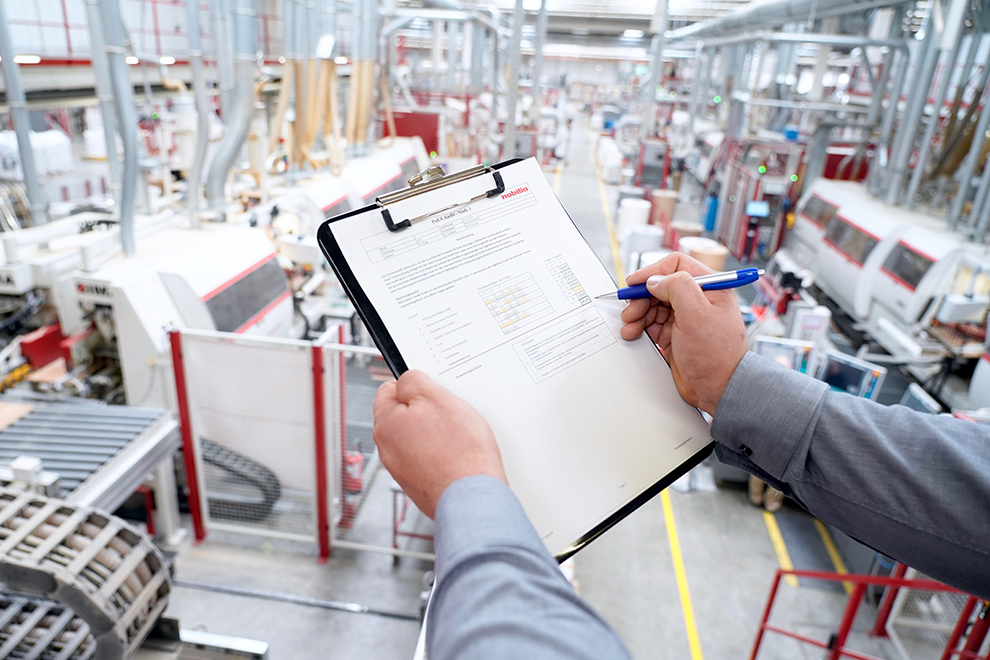
Our management system helps us to define clear rules, instructions and processes for our activities. This creates transparency that greatly facilitates our work. When it comes to saving energy and reducing our carbon footprint, ISO 50001 (energy) is especially important. This international standard is helping nobilia to establish systematic energy management based on recording energy flows (energy sources, use and consumers) and evaluating the level of energy efficiency. This data forms the basis on which measures can be developed and implemented.

LED lighting: intelligent lighting systems
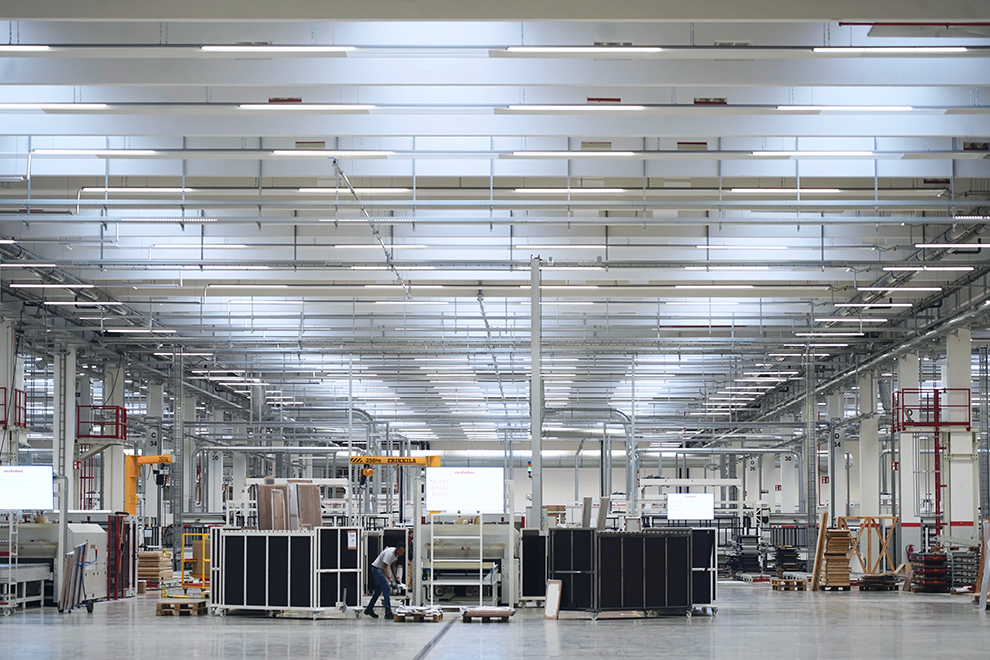
Replacing conventional bulbs with LEDs, switching off lights when no-one’s there – just like in all our homes, this is standard practice at nobilia too. We’ve therefore installed LED lighting in production areas and most administration buildings. And we save even more energy by only switching on lights when needed. To this end, we’ve installed a “DALI” lighting control system at nobilia, which adjusts the lighting according to the available daylight: depending on the amount of natural daylight entering the respective hall, the LED lighting is automatically dimmed.

EEMC: taking measures across all plants
A large proportion of the CO2 emissions we produce result from production and our vehicle fleet. A targeted, company-wide concept is needed to work on measures that will improve energy efficiency. With this in mind, we’ve established at nobilia an Energy and Environmental Management Committee in our technology division. This committee evaluates and coordinates all energy and environmental activities across all departments and plants and takes steps towards their implementation. All technical departments with a bearing on energy and the environment take part in the committee meetings.

Reject reduction: prevention first, then recycling
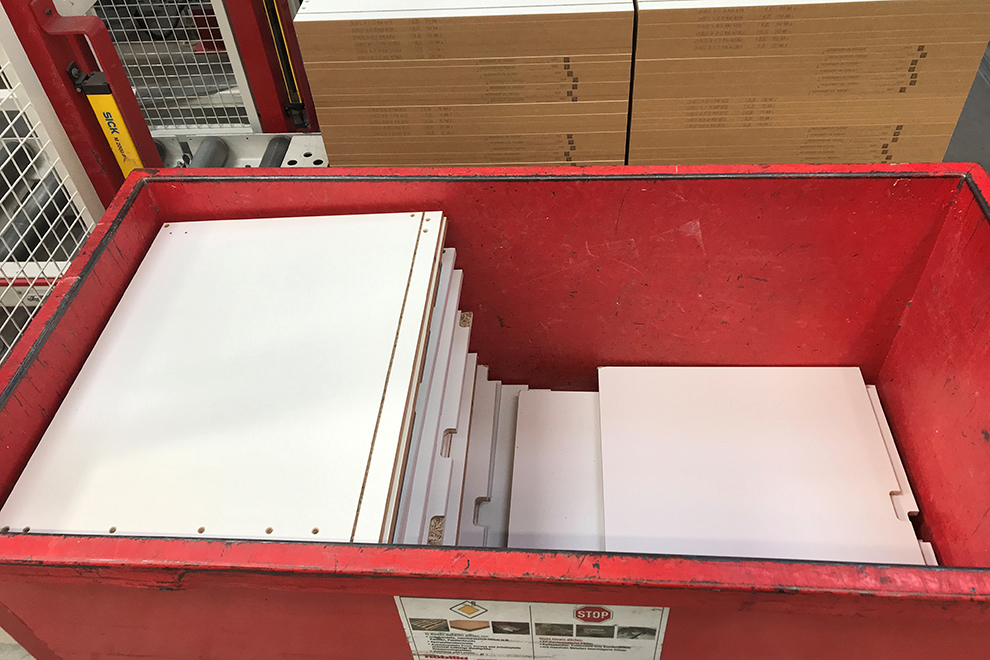
nobilia generates around 750,000 tonnes of wood waste each year. We utilise this waste in two ways: some is used as fuel, whilst the majority is returned to a manufacturer so that it can be used as recycled material in new chipboard or for energy generation. However, the same principle applies here: prevention comes before recycling. This applies in particular to offcuts, which, unlike normal sawdust, have required valuable energy and working time to produce. Preventing offcuts therefore means a benefit for the environment and more efficient working practices, which in turn saves money in production.

Emergency management: being prepared for an emergency
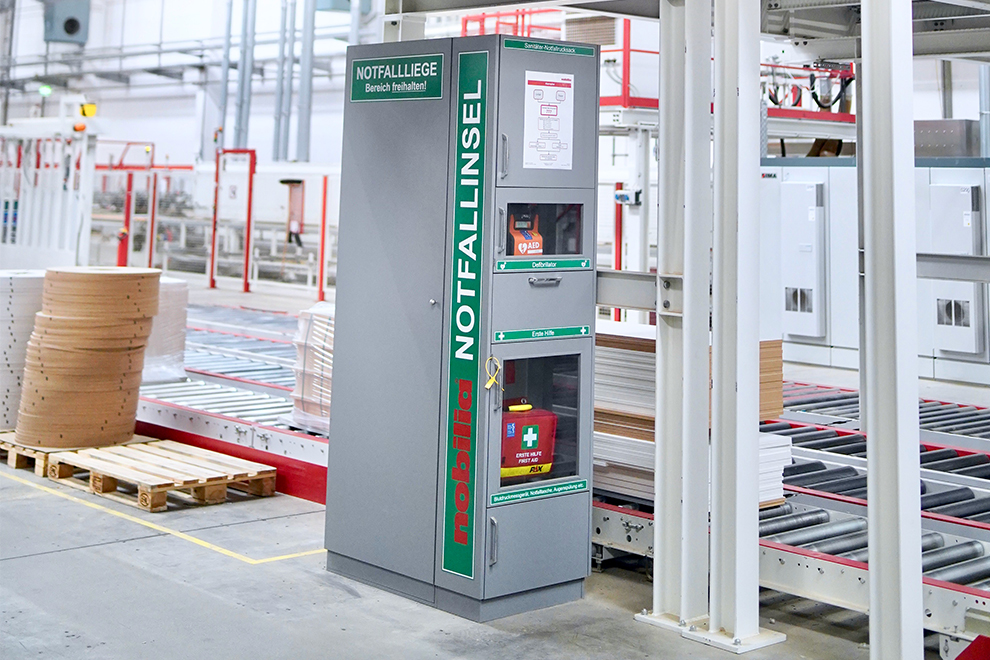
Our emergency management system is designed to ensure we are as well prepared as possible for risk scenarios. Company first-aiders, emergency stations and fire safety measures are examples of our emergency management system. In the event of health issues, nobilia has introduced a system comprising around 50 company first-aiders. In addition to the first-aid kit, additional emergency stations are available across all departments. Fire safety measures of all kinds are our top priority. Our focus here includes, for example, cooperation and drills with the local fire brigade, or the establishment of a notification system to inform all necessary personnel in the event of an emergency.

Reduce water consumption, avoid hazardous substances
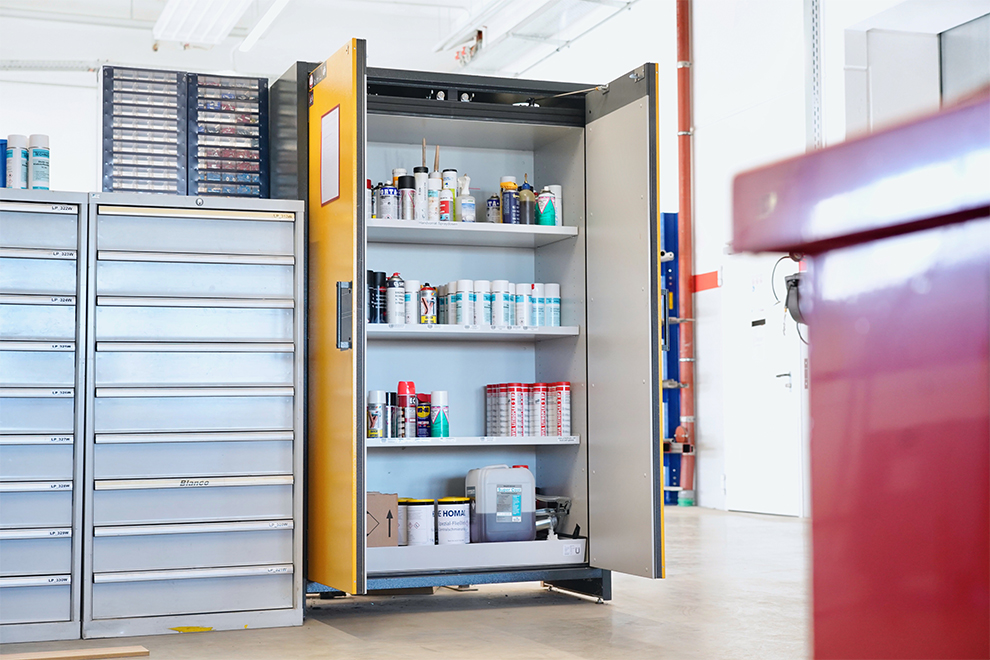
nobilia limits its water usage to what is strictly necessary. Our processes largely do not require water. Water is needed only for a few cooling processes. Furthermore, water usage is restricted to the canteen, the sanitary facilities and cleaning activities. The use of hazardous substances is also kept to a minimum. This mainly concerns the following groups of substances: adhesives, cleaning agents and lubricants. The health and safety of our staff is our top priority, which is why hazardous substances undergo comprehensive safety assessments and testing before being introduced into the workplace.